
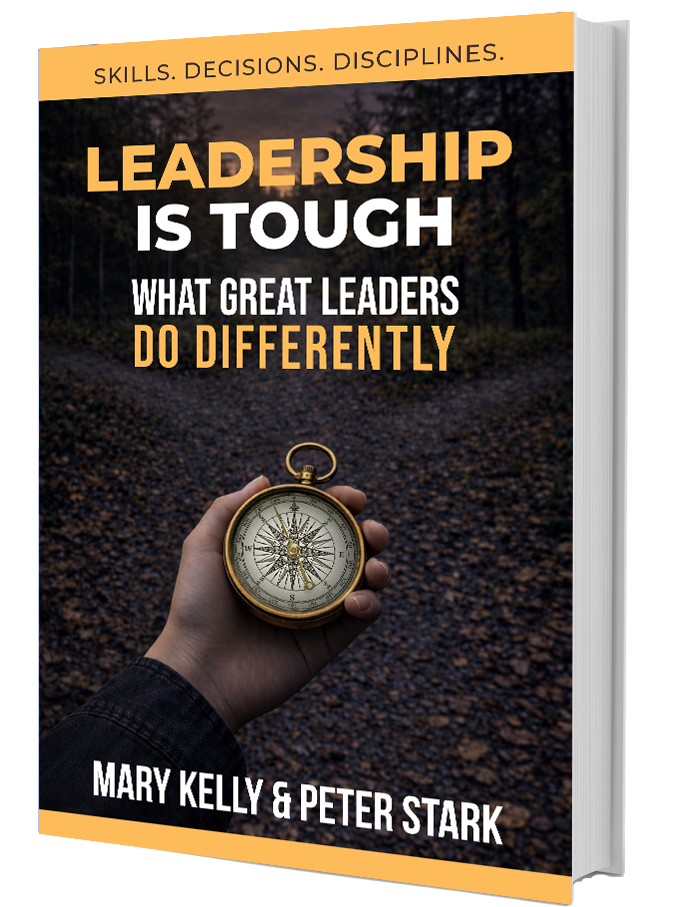
LEADERSHIP IS TOUGH
What Great Leaders Do Differently
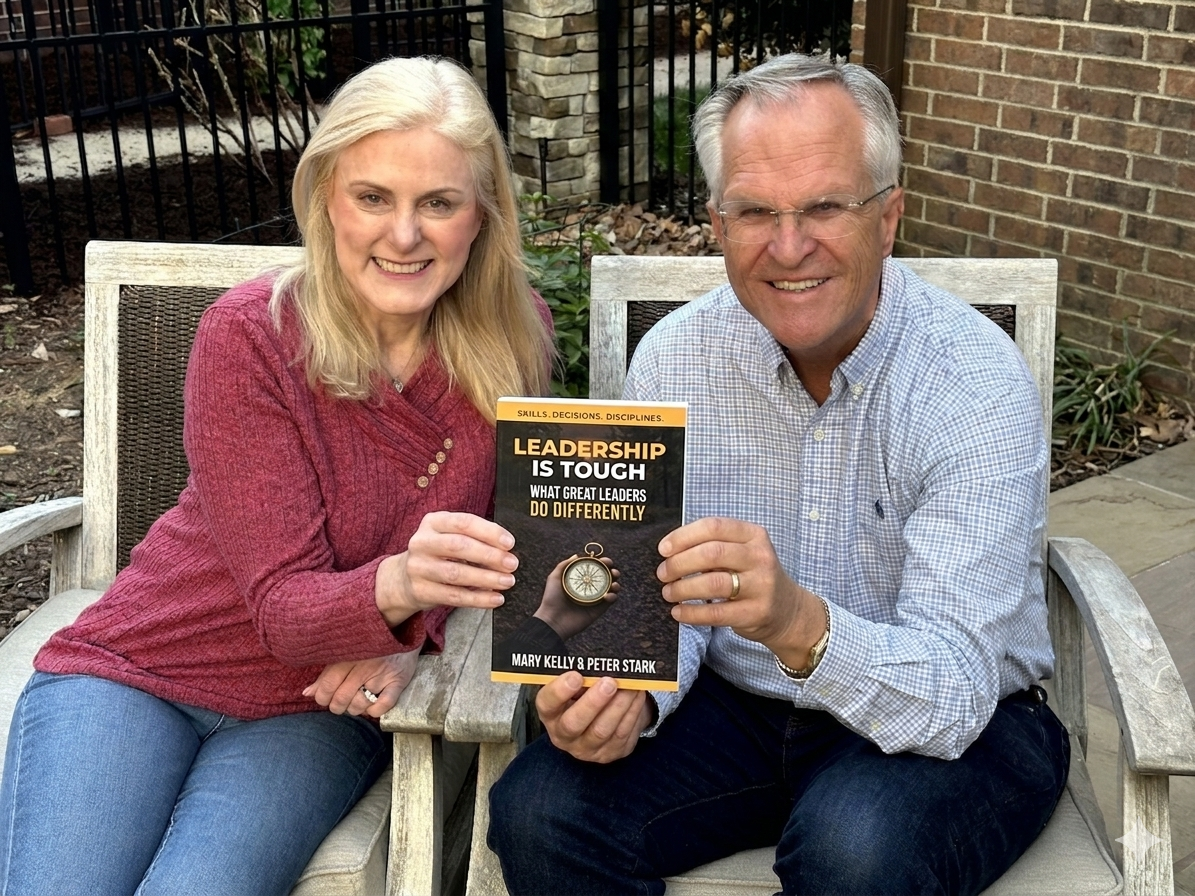
by Mary Kelly & Peter Stark
Effective leadership is not about authority or having all the answers, but about making disciplined decisions, building trust, developing people, and maintaining clarity and resilience under pressure.
About the Book
Skills. Decisions. Disciplines.
Leadership Is Tough dismantles comforting myths and replaces them with a clear, unflinching case: leadership is responsibility, not popularity. Mary Kelly and Peter Stark show how the best leaders make high-stakes decisions with imperfect information, steadying teams through constant disruption. Practical, evidence-based, and candid, this book trains leaders to act with clarity, courage, and disciplined habits when the cost of indecision is high.
This game-changing leadership book presents a candid, practical guide to leading in a world defined by constant change, uncertainty, and high stakes. Through real-world insights and actionable frameworks, the book shows how leaders can navigate complexity, manage competing demands, and create accountable, high-performing teams without burning out themselves or their people. Ultimately, it positions leadership as a daily practice of courage, consistency, and responsibility—especially when it is hardest.
The Core Philosophy…
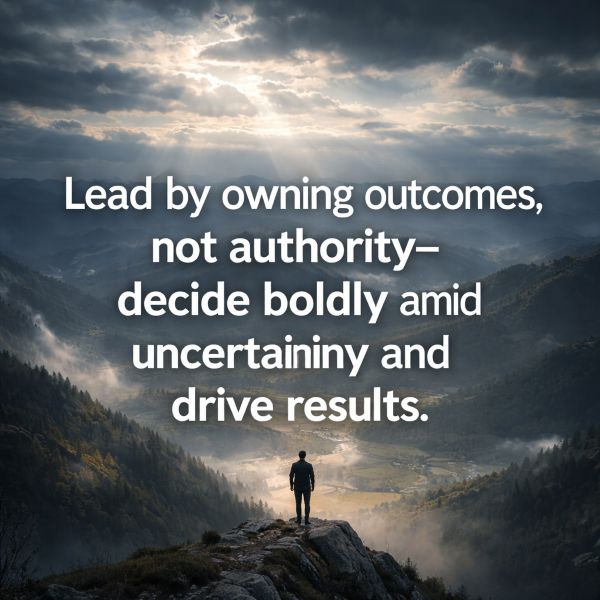
Effective leadership isn’t about being liked or having all the answers; it is defined by clarity, discipline, and consistency. Your organization doesn’t respond to your intentions—it responds to your decisions.
Who This Book Is For…
This guide is designed for high-impact leaders navigating complexity:
-
Senior Executives (C-Suite): Those making high-stakes decisions in volatile markets.
-
Rising Leaders: Aspiring professionals preparing for expanded responsibility and larger spans of control.
-
Team Leaders: Managers seeking to instill a culture of accountability and disciplined execution.
-
Executive Advisors: Board members, HR leaders, and coaches guiding organizations through disruption.
What You Will Do Differently
The book shifts your approach from theory to tactical execution across six critical pillars:
-
Decision-Making: Learn to separate signal from noise and make high-quality decisions quickly, even with incomplete data.
-
Navigating Uncertainty: Use the adoption J-curve to manage change fatigue and maintain team adaptability during shifts.
-
Accountability: Align team behaviors with outcomes and address underperformance directly without damaging trust.
-
Strategic Alignment: Replace “noise” with intentional communication to eliminate ambiguity and build organizational confidence.
-
Stakeholder Management: Balance short-term demands with long-term strategy, make trade-offs explicit, and maintain board credibility.
-
Executive Capacity: Protect your mental bandwidth and build the resilience required to lead with composure under sustained pressure.
The Bottom Line: Leadership is tough. This framework ensures you have the discipline to get it right.
15 Chapters that will Change the Way You Lead
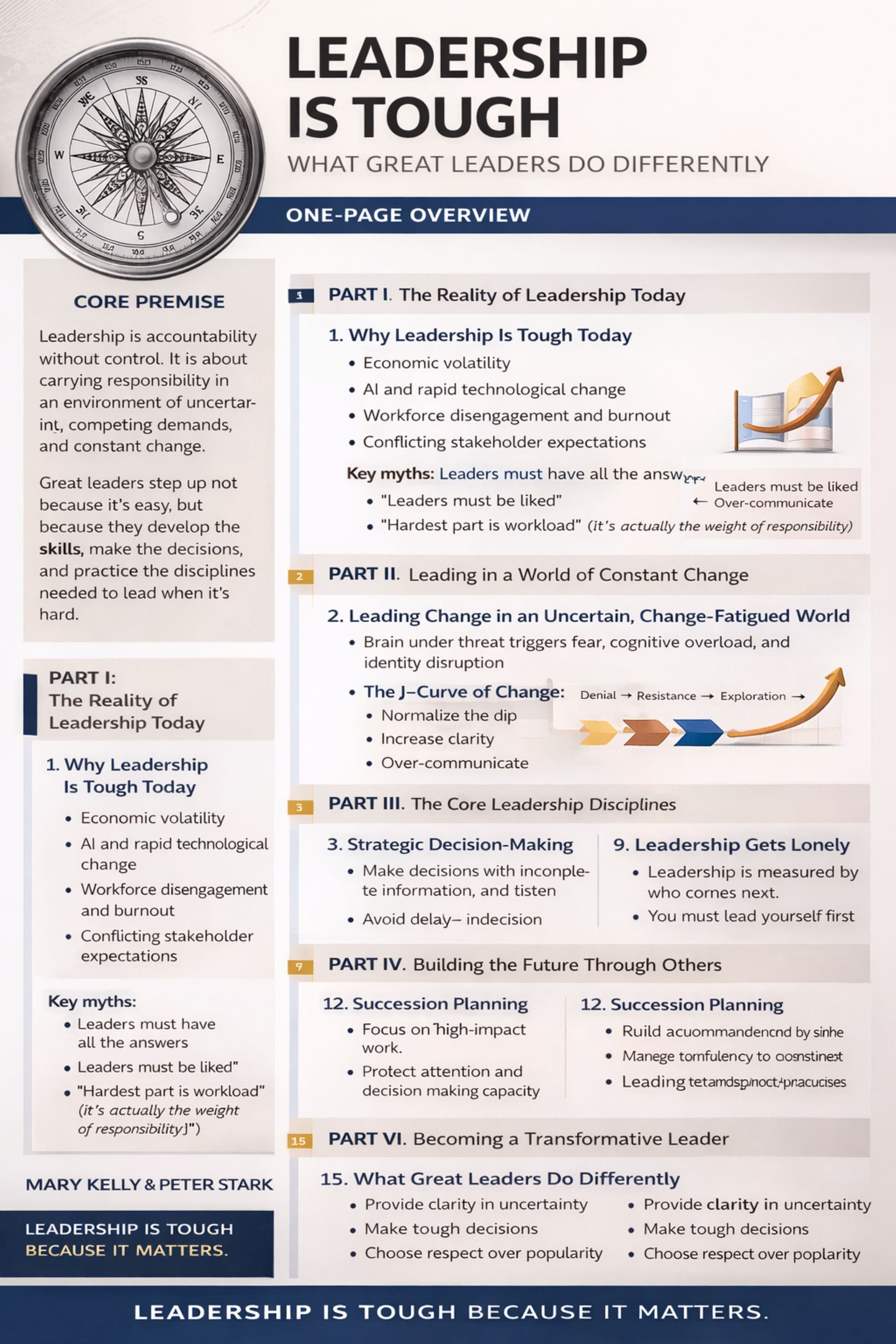
Chapter 1: Why Leadership Is Tough Today
Leadership today is defined by complexity, constant change, and accountability without full control, requiring leaders to navigate uncertainty while maintaining clarity and composure. This chapter reframes leadership as a discipline built on courage, consistency, and resilience rather than authority or popularity.
Chapter 2: Leading Change in an Uncertain and Change-Fatigued World
Modern leaders must guide teams through continuous disruption by understanding the psychological and neurological impact of change on people. Success depends on creating clarity, reducing overload, and leading with transparency to move teams from resistance to commitment.
Chapter 3: Strategic Decision-Making: Make the Call Before the Call Is Made for You
Effective leaders make timely, informed decisions despite incomplete information, recognizing that indecision carries its own risks. This chapter outlines how to balance data, judgment, and accountability to drive momentum and avoid reactive leadership.
Chapter 4: Working Well with Others: How You Treat People Defines You
Leadership effectiveness is grounded in how leaders interact with others, especially during conflict and pressure. Strong relationships, mutual respect, and intentional communication are essential for building high-performing teams.
Chapter 5: Building Trust: Communicate and Connect with Others
Trust is the foundation of leadership and is built through consistent actions, clear communication, and genuine connection. Leaders who prioritize transparency and follow-through create environments where people feel safe, valued, and engaged.
Chapter 6: Empathy Is a Discipline: Understand Without Lowering the Bar
Empathy is not a soft skill but a strategic discipline that enables leaders to understand others while maintaining high standards. This chapter shows how to balance compassion with accountability to drive both performance and engagement.
Chapter 7: Priorities and Values: Align Purpose with What Actually Gets Done
Leaders must align stated values with daily actions and decisions to maintain credibility and focus. This chapter emphasizes prioritization as a leadership responsibility that ensures effort is directed toward what truly matters.
Chapter 8: Accountability: Hold the Line Without Breaking Trust
Accountability is essential for performance, but it must be applied consistently and fairly to maintain trust. Leaders who address issues directly and early create cultures where responsibility and results are expected.
Chapter 9: Leadership Gets Lonely: Lead Yourself When You’re the One in Charge
Leadership often involves isolation, especially when making difficult decisions without clear support. This chapter highlights the importance of self-leadership, discipline, and the development of a support network to stay grounded.
Chapter 10: Resilience Is Earned: Develop Capacity, Withstand Pressure, Avoid Burnout
Resilience is built through intentional habits that strengthen mental, emotional, and physical capacity over time. Leaders must actively manage stress and recovery to sustain performance and avoid burnout.
Chapter 11: Managing Time and Energy: Achieve the Most Important Results
Productivity is not about doing more but about focusing on what matters most and managing energy effectively. This chapter provides strategies for prioritization, boundaries, and disciplined execution.
Chapter 12: Succession Planning: Build Your Bench and Future-Proof the Organization
Strong leaders develop others and prepare their organizations for future leadership transitions. This chapter emphasizes proactive talent development as a key driver of long-term success.
Chapter 13: Mentorship Is a Decision: Advice for Purposeful Development
Mentorship requires intentional effort and commitment from both leaders and learners. Effective mentoring accelerates growth, builds capability, and strengthens organizational culture.
Chapter 14: Leading Your Board Without Losing Control
Leaders must navigate board relationships with clarity, confidence, and strategic communication. This chapter outlines how to maintain alignment while retaining operational authority and direction.
Chapter 15: Becoming a Transformative Leader
Transformative leaders create lasting impact by combining vision, discipline, and a commitment to developing others. This final chapter integrates the book’s principles into a cohesive approach for leading with purpose and effectiveness.
What Trusted Leaders Across Industries Are Saying about LEADERSHIP IS TOUGH
“Leadership Is Tough: What Great Leaders Do Differently by Dr. Mary Kelly and Peter Stark is generating conversation among CEOs, military leaders, healthcare administrators, and government officials in 2026.”
“A manager oversees processes. A leader grows people… the most enduring leaders are not those who accumulate authority, but those who develop others.”
“Thank goodness ‘popularity’ is not a leadership requirement. Leaders deal with difficult decisions and difficult people.”
“Hire people smarter than you and help them to shine. Combine that with creating a culture of collaboration towards a shared vision, and your organization achieves great things!”
“Effective leadership will always come down to human-to-human relationships, and these two masterful storytellers not only explain why but also provide us a roadmap to get better.”
“Mary and Peter nail it… when they said leadership is Accountability without complete control.”
“This book doesn’t offer shortcuts. It offers discipline, perspective, and the kind of guidance leaders actually need when the job gets heavy.”
“Leadership is not only tough, but it can also feel lonely. Moments of key decision-making feel unique and isolating… don’t try to lead in isolation.”
“The most effective and strategic leaders lead with connection, inclusion, respect, and care. These habits command respect, not demand it.”
“Leadership is tough because you are accountable for outcomes you don’t fully control, in environments that rarely stand still. Great leaders don’t have all the answers — they create clarity when others see noise.”
“Our leaders in the Vietnam POW camps suffered the most torture and isolation, but they always bounced back to resist, survive, and return with honor. They were a great example and inspired all of us.”
“Leadership is simple, but it is not easy. It requires discipline, courage, and humility to keep learning.”
“Leadership Is Tough captures what every leader eventually discovers: that connecting with clarity, humanity, and consistency across an entire organization is one of the hardest things we are asked to do.”
FREE Downloads
Start Reading Today
Take the decisive step to lead better now—equip yourself with the skills, decisions, and disciplines that separate good intentions from lasting results. Order your copy and start turning pressure into performance.
The AUTHORS
Mary Kelly, PhD
CEO, Productive Leaders
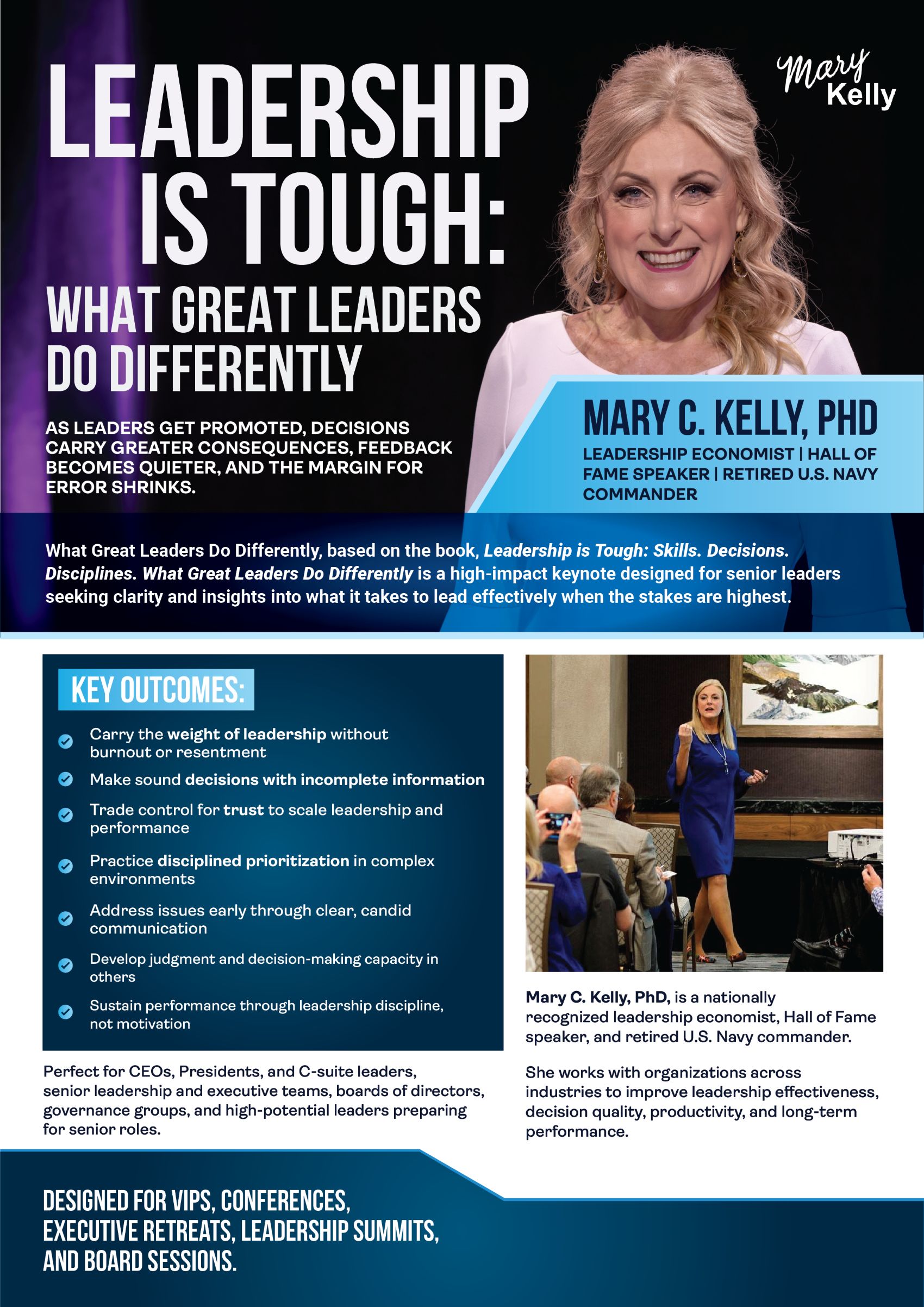
Mary Kelly, PhD, is a retired Navy Commander with a doctorate in economics and CEO of Productive Leaders, who helps organizations convert uncertainty into decisive action. Mary is one of the most sought-after leadership speakers in the country. She combines military precision with business acumen to help leaders build high-performing, resilient organizations.
Peter Barron Stark
President, Peter Barron Stark Companies
Peter Stark is a bestselling consultant and CEO of Peter Barron Stark Industries, with decades of experience advising executives on culture and performance. He is a nationally recognized management consultant, keynote speaker, and author with decades of experience developing leaders across industries.
Together, they wrote this book to share proven practices that prevent costly leadership failures. Their combined experience brings military rigor and corporate wisdom to leaders facing modern complexity.
Best-selling author
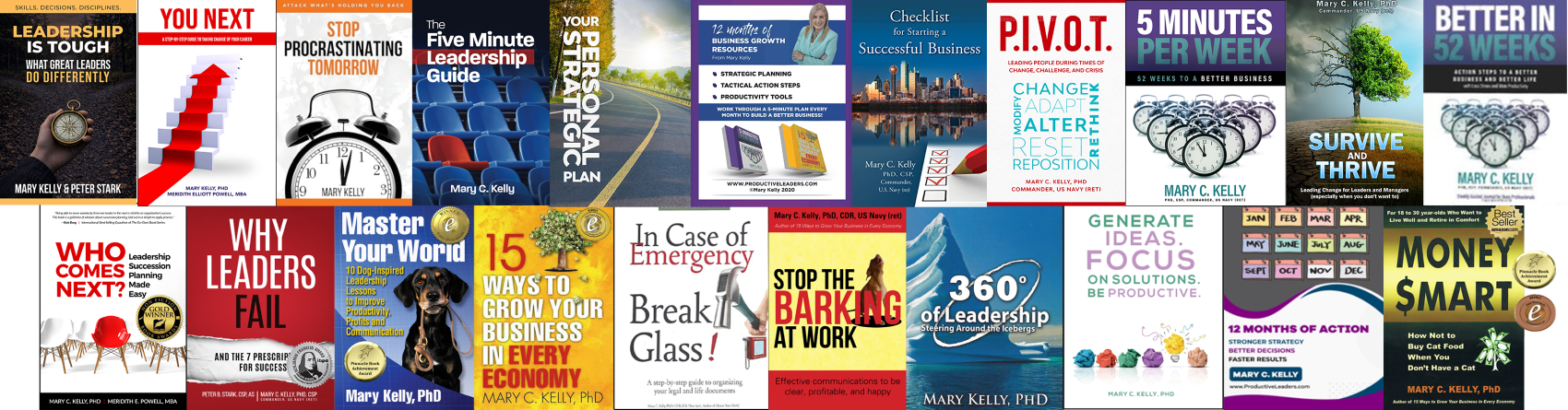
Mary is the author of 20 books on business, leadership, and economics. Please see Mary’s books here.
Mary has been quoted in the Wall Street Journal, Money Magazine, MENSA, Men’s Magazine, and thousands of additional media outlets.

THE SPEAKER
Direct, interactive, motivational, and memorable

Author of 15 business and leadership books

Naval Officer and Commander (ret.) Trained over 40,000 personnel

Transforming leaders and businesses with insightful techniques

Professor at the Naval Academy, Airforce Academy, CSU, and HPU