
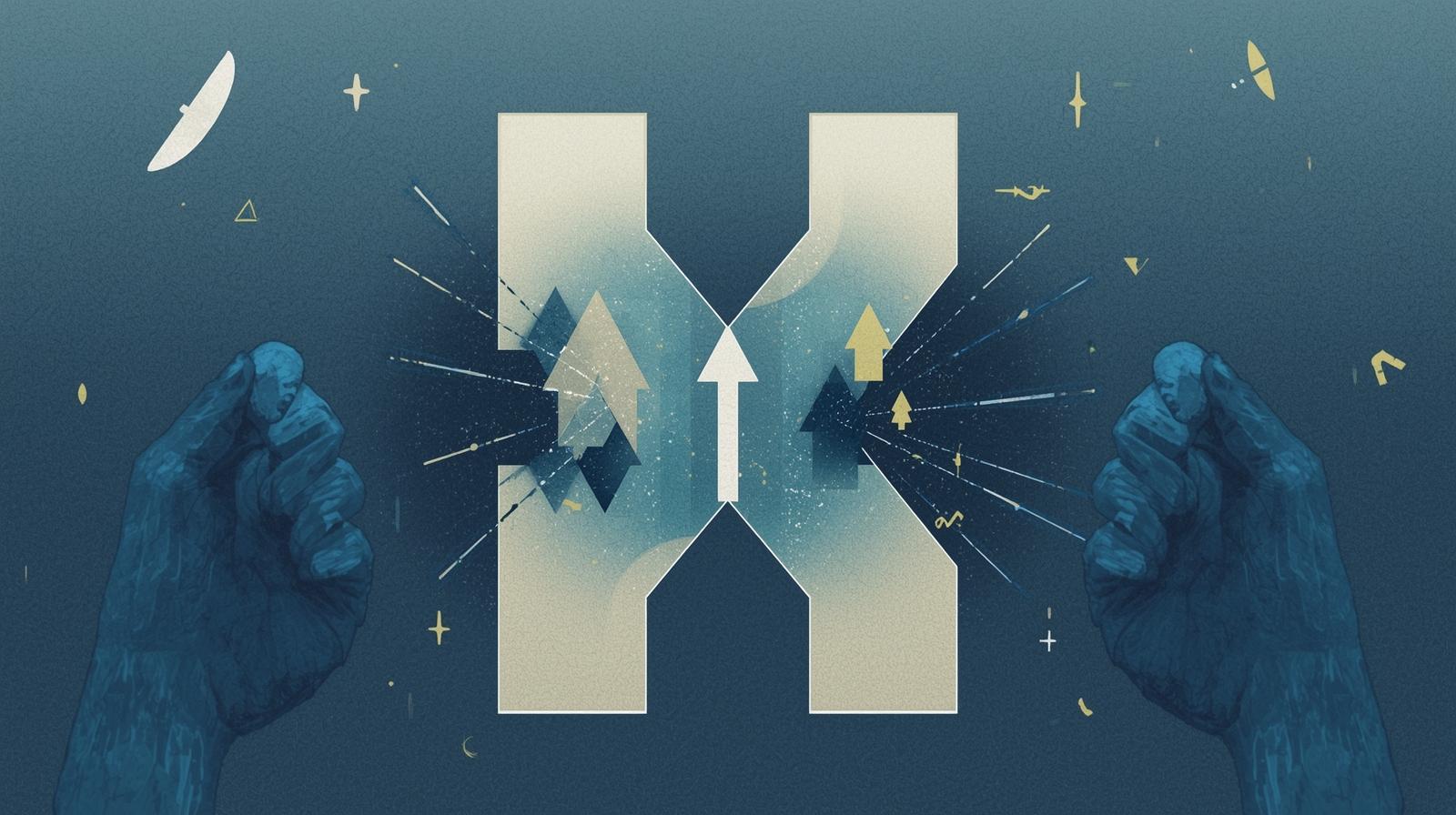
The K-Shaped Economy in 2026: Divergence Is Here to Stay
By Dr. Mary C. Kelly, Leadership Economist and Hall of Fame Speaker
If you feel like people are experiencing completely different economies right now, you are not imagining things.
Some households are traveling, investing, and upgrading homes. Others are juggling credit cards, delaying purchases, and worrying about job stability. Some businesses are scaling with technology and strong margins, while others are barely holding on.
This is the K-shaped economy and in 2026, it will no longer be a temporary phase. It will be the economic landscape leaders must operate in.
What a K-Shaped Economy Really Means
A K-shaped economy describes a situation where different groups move in opposite economic directions at the same time.
One arm of the “K” goes up:
- Higher incomes
- Strong asset growth
- Better job security
- Greater access to opportunity
The other arm goes down:
- Higher debt
- Rising cost pressure
- Limited savings
- Fewer options
This divergence shows up everywhere—income levels, industries, geography, skills, and even within the same organizations. And by 2026, that separation will become sharper, not softer.
Two Consumer Economic Trends, Side by Side
In 2026, consumer behavior will not move as a single trend.
On the upper side of the K, consumers will continue to spend on:
- Travel and experiences.
- Premium services
- Healthcare and longevity
- Home upgrades and second homes
These households tend to have stable incomes, appreciated assets, and access to credit on reasonable terms.
On the lower side of the K, consumers will:
- Trade down on purchases
- Delay discretionary spending.
- Rely more heavily on credit.
- Feel constant pressure from inflation.
Both realities exist simultaneously and businesses must plan for both.
Businesses Will Split into Two Categories
By 2026, the difference between thriving businesses and struggling ones will not just be demand. It will be productivity.
Businesses moving up the K tend to:
- Use automation and AI strategically.
- Generate more revenue per employee.
- Maintain pricing power.
- Invest in leadership development.
- Understand their true costs and margins.
Businesses sliding down the K often:
- Depend heavily on manual labor.
- Operate with thin margins.
- Rely on outdated systems.
- Lack succession plans and leadership depth.
- Absorb cost increases without productivity gains.
This does not mean smaller businesses cannot succeed. It means intentional strategy matters more than size.
The Labor Market Will Be Tight—and Uneven
Demographics will dominate the workforce conversation in 2026.
As retirements accelerate and fewer younger workers enter the labor force, the real divide will be skills.
Workers on the upward path will be:
- Technically capable
- Adaptable
- Comfortable using AI tools.
- Strong communicators and problem solvers
Workers on the downward path will face:
- Fewer advancement opportunities
- Greater automation risk
- Limited access to training
This is not about effort or character—it is about preparation and access to skill development.
Geography Will Matter More Than Ever
Where people live and where businesses operate will increasingly determine outcomes.
Regions benefiting from:
- Manufacturing reshoring
- Logistics and distribution hubs
- Energy development
- Business-friendly environments
will continue to grow.
Regions facing population decline, high fixed costs, or shrinking tax bases will struggle to keep pace.
AI Will Be a Sharp Divider
By 2026, artificial intelligence will no longer be optional.
Organizations using AI to:
- Improve customer access.
- Reduce errors and fraud.
- Speed decisions
- Increase employee effectiveness.
will move decisively up the K.
Those that avoid it or fail to train people to use it well will fall behind, regardless of industry.
What This Means for Leaders
A K-shaped economy rewards discipline and foresight, not wishful thinking.
Successful leaders in 2026 will:
- Plan for uneven demand
- Invest in skills and training.
- Build leadership bench strength.
- Make data-driven decisions.
- Focus relentlessly on productivity.
- Strengthen balance sheets.
The Bottom Line
The K-shaped economy in 2026 will feel uncomfortable because not everyone advances at the same pace. Not every business grows the same way. And averages hide more than they reveal.
A K-shaped economy does not eliminate opportunity.
It rewards preparation, adaptability, and leadership.
The winners will not be just lucky.
They will be strategic and deliberate.
Take Our Quick Assessment Below:
Which Side of the K Are You On?
A Leadership & Organizational Readiness Assessment.
The K-shaped economy is not theoretical, it is operational.
Organizations are moving in different directions at the same time, often within the same industry.
This short assessment helps leaders determine whether their organization, team, or business is positioned on the upward leg of the K or sliding toward the downward leg—and where intervention is needed.
This is a planning tool, not a performance review, so be honest.
How to Use This Assessment
For each statement below, rate your organization on a scale of 1 to 5:
- 1 = Strongly Disagree
- 2 = Disagree
- 3 = Neutral / In Progress
- 4 = Agree
- 5 = Strongly Agree
Write down your score for each section.
Section 1: Financial & Strategic Discipline
- _____We have a clearly defined strategic plan that accounts for multiple economic scenarios.
- _____We understand our true margins by product, service, or department.
- _____We maintain adequate cash reserves or access to liquidity.
- _____Our leadership team regularly reviews financial and economic indicators.
- _____We make disciplined decisions about where not to spend time or money.
Section 1 Total: _____ / 25
Section 2: Productivity & Technology Use
- _____We actively use technology or AI to improve efficiency and decision-making.
- _____Our systems reduce manual work rather than add complexity.
- _____We measure productivity, not just hours worked.
- _____Employees are trained to use tools effectively—not just given access.
- _____Technology investments are tied to clear business outcomes.
Section 2 Total: _____ / 25
Section 3: Talent, Skills & Bench Strength
- _____We know which roles are mission-critical to success.
- _____We have identified potential successors for key leadership positions.
- _____We actively develop skills inside the organization rather than relying only on hiring.
- _____High performers are recognized, retained, and challenged.
- _____Knowledge is documented and transferable—not trapped in one person’s head.
Section 3 Total: _____ / 25
Section 4: Leadership & Decision Quality
- _____Leaders communicate clearly, especially during uncertainty.
- _____Decisions are data-informed, not driven by habit or emotion.
- _____We hold people accountable without micromanaging.
- _____Leaders model adaptability and continuous learning.
- _____We address problems early instead of letting them linger.
Section 4 Total: _____ / 25
Section 5: Market Awareness & Adaptability
- _____We understand how our customers’ financial realities are changing.
- _____We regularly reassess pricing, value, and service models.
- _____We can pivot offerings if demand shifts.
- _____We are paying attention to demographic and workforce trends.
- _____We are actively positioning for where the market is going—not where it was.
Section 5 Total: _____ / 25
Your Total Score
Total Possible Score: 125
Your Score: _____
What Your Score Means
100–125: Upward Leg of the K
You are positioned to gain advantage in a K-shaped economy.
Your challenge is sustaining momentum, avoiding complacency, and continuing to invest wisely.
Focus: Scaling smartly, developing leaders, and leveraging technology further.
75–99: Transitional Zone
You are straddling both sides of the K. Some systems are working; others are exposed.
Focus: Tightening strategy, improving productivity, and strengthening leadership depth before pressure forces change.
50–74: At Risk
Your organization is vulnerable to economic divergence.
Focus: Financial discipline, skill development, process redesign, and succession planning.
Below 50: Downward Leg of the K
You are operating reactively in a K-shaped economy.
Focus: Immediate strategic intervention is needed—this is not a “wait it out” environment.
The Reality Check
A K-shaped economy does not care about intent, history, or effort.
It responds to preparation, productivity, and leadership.
The good news?
Position is not permanent.
With the right strategy, tools, and leadership focus, organizations can move up the K.
Related Article: What Do Economists Do in a Slow Economy? My Expert Strategies & Tips
About Mary:
Mary Kelly, PhD is a leadership economist, keynote speaker, and former U.S. Navy commander who helps business leaders make smart decisions in uncertain economic times. She translates complex economic trends, workforce data, and market uncertainty into clear, practical leadership actions leaders can use immediately.
Mary speaks to CEOs, executives, boards, and association leaders on the intersection of economics, leadership, productivity, workforce strategy, succession planning, and organizational performance. Her presentations blend real-world economics, leadership research, and decades of experience leading people through high-stakes environments.
She is frequently selected as an opening keynote speaker because she sets the strategic tone for conferences—helping audiences understand what is happening in the economy, why it matters to their organization, and what leaders must do next to stay competitive. Her programs are insightful, engaging, and grounded in reality, making complex issues accessible without oversimplifying them.
A Hall of Fame professional speaker, best-selling author of more than 20 books, and a recognized authority on leadership and economic trends, Mary is known for delivering high-content, high-energy keynotes that challenge leaders to think differently, plan strategically, and lead with confidence in times of change.
0 Comments